
CDN Security: Keeping Your Website Safe from DDoS Attacks
CDN Security: Keeping Your Website Safe from DDoS Attacks
Introduction
In our rapidly evolving digital landscape, we depend on websites and online services for shopping, socializing, and obtaining information. To cater to these needs, Content Delivery Networks (CDNs) have become essential in delivering content quickly and effectively. As our online presence grows, it's essential to safeguard our websites from numerous threats. In this article, we'll look at how CDNs can help protect your website from harmful attacks, focusing on Distributed Denial of Service (DDoS) attacks, and provide tips on making your website even safer.
What Are DDoS Attacks?
DDoS attacks are cyber attacks that aim to disrupt a website or online service by overwhelming it with a flood of traffic. Imagine thousands of people showing up at a store at the same time, making it impossible for the store to serve anyone. That's what a DDoS attack does to a website. There are three main types of DDoS attacks:
Volumetric attacks: The attacker floods the target with a massive amount of fake traffic, overwhelming the network's bandwidth. Protocol attacks: The attacker exploits weakness in network protocols, such as the Transmission Control Protocol (TCP), to exhaust the target's resources. Application layer attacks: The attacker targets specific applications, like a web server, by sending seemingly legitimate requests that overwhelm the application's processing capabilities. These attacks can be really bad for businesses, causing financial losses, damaging their reputation, and upsetting customers. Often, attackers use networks of hacked computers, called botnets, to launch massive DDoS attacks that are difficult to stop.
How CDNs Keep Websites Safe from DDoS Attacks
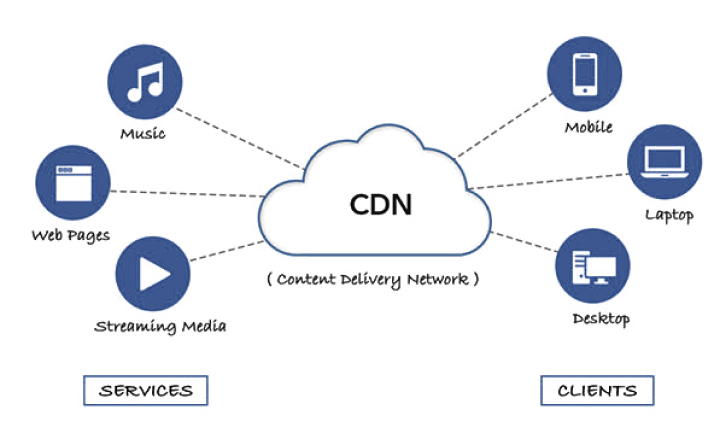
CDNs use a vast network of servers spread across the globe to store and share content, making websites load faster and perform better. But they also play a crucial role in protecting websites from DDoS attacks. Here's how CDNs help keep websites safe:
Filtering out bad traffic and controlling the flow: CDNs can recognize malicious traffic and block it before it reaches your website's main server. This traffic filtering helps keep your website running smoothly and prevents attackers from causing disruptions.
Blocking bad IP addresses: CDNs maintain a list of IP addresses that have been involved in past attacks or are known to cause trouble. By blocking traffic from these IP addresses, CDNs can prevent potential attacks from ever reaching your website.
Spreading traffic across servers: CDNs use a system called Anycast routing to distribute traffic evenly among their servers. This means that even during an attack, traffic is shared between multiple servers, preventing any single server from becoming overwhelmed and keeping your website up and running.
Other Threats CDNs Protect Against
Besides DDoS attacks, CDNs also help protect websites from other online threats. Let's take a look at some of these threats and how CDNs help defend against them:
Web application attacks: Internet Crime often target web applications, like contact forms or login pages, to exploit weakness in their code. Common web application attacks include SQL injection and cross-site scripting. CDNs use Web Application Firewalls (WAFs) to detect and block these attacks, keeping your website secure.
Data breaches and leaked information: Data breaches can result in sensitive information, like customer data or login credentials, being stolen and exposed. CDNs often provide SSL/TLS encryption to secure data transmissions between users and CDN servers. This encryption helps ensure that any data transferred through the CDN remains confidential and safe from prying eyes.
Malware and botnet attacks: Malware is malicious software that can infect devices, steal sensitive data, or be used to launch further attacks. Botnets are networks of compromised devices, often controlled by hackers, that can be used to carry out large-scale attacks. CDNs employ advanced threat intelligence and machine learning algorithms to detect and block traffic from botnets and malware infection devices. By stopping this malicious traffic, CDNs can prevent potential attacks and keep your website safe.
Picking a Safe CDN Provider
When choosing a CDN provider, it's essential to look for one with strong security features, a good reputation, and a history of success. Keep the following factors in mind when evaluating CDN providers:
DDoS protection: Make sure the provider has strong DDoS protection, including filtering out harmful traffic, blocking bad IP addresses, and spreading traffic using Anycast routing.
Web Application Firewall (WAF): A WAF can keep your website safe from common attacks like SQL injection and cross-site scripting.
SSL/TLS encryption: Choose a CDN provider that has SSL/TLS encryption to keep data safe when it's sent between users and CDN servers.
Secure token checks: This feature adds extra safety by needing a special token for each user session, which makes it harder for attackers to get into your website without permission.
Customer support and security know-how: Pick a CDN provider with a helpful security team and quick customer service to help you with any worries and keep you updated on the newest threats and ways to stop them.
Some well-known CDN providers with strong security features include Cloudflare, Akamai, and Fastly.
Tips for Making Your CDN Even Safer
To further enhance your CDN's security, consider implementing the following best practices:
Keep software up-to-date: Regularly update and patch your website's software, including content management systems (CMS), plugins, and themes. This will help prevent attackers from exploiting known weakness.
Use multi-factor authentication (MFA): Enable MFA for administrative access to your CDN and website accounts. MFA requires users to provide multiple forms of identification, making it more difficult for attackers to gain unauthorized access.
Monitor traffic patterns: Regularly review your website's traffic patterns and logs to detect any anomalies or suspicious activity. Promptly report any concerns to your CDN provider and work with them to address potential threats.
Use a strong password policy: Encourage the use of strong, unique passwords for all accounts associated with your website and CDN. This will make it more difficult for attackers to gain access through brute force or password-guessing attacks.
Educate your team: Ensure that everyone involved in managing your website, from developers to content creators, is aware of the importance of security and follows best practices.
Conclusion
CDNs play a crucial role in keeping websites fast, efficient, and secure from DDoS attacks and other online threats. As our digital landscape continues to evolve, it's more important than ever for businesses to be proactive and vigilant in protecting their websites. By choosing a secure CDN provider and implementing best practices, you can ensure that your website remains safe, reliable, and accessible to users worldwide in our ever-changing digital world.
FAQ
Q: What is the main purpose of a Content Delivery Network (CDN)? A: The main purpose of a CDN is to quickly and efficiently distribute content to users, improving website performance and user experience.
Q: Are there other benefits to using a CDN besides DDoS protection? A: Yes, CDNs also provide benefits like faster load times, reduced server load, and improved reliability.
Q: How can I tell if a CDN provider is secure and reliable?
A: Look for a provider with a strong reputation, a history of success, and comprehensive security features like DDoS protection, a Web Application Firewall, SSL/TLS encryption, and secure token verification.
Q: What is a Web Application Firewall (WAF)?
A: A WAF is a security feature that helps protect websites from common web application attacks, such as SQL injection and cross-site scripting.
Q: Is it necessary to enable SSL/TLS encryption on my website?
A: Yes, SSL/TLS encryption is essential for securing data transmissions between users and CDN servers, helping to protect sensitive information from being intercepted by attackers.
Q: Can I further enhance the security of my CDN?
A: Yes, implementing best practices like keeping software up-to-date, using multi-factor authentication, monitoring traffic patterns, and having a strong password policy can improve the overall security of your CDN.
Q: How does Anycast routing help protect against DDoS attacks?
A: Anycast routing distributes traffic evenly among a CDN's servers, preventing any single server from becoming overwhelmed during an attack and ensuring your website remains accessible.